
Best Places to See Northern Lights: 10 Destinations to Visit
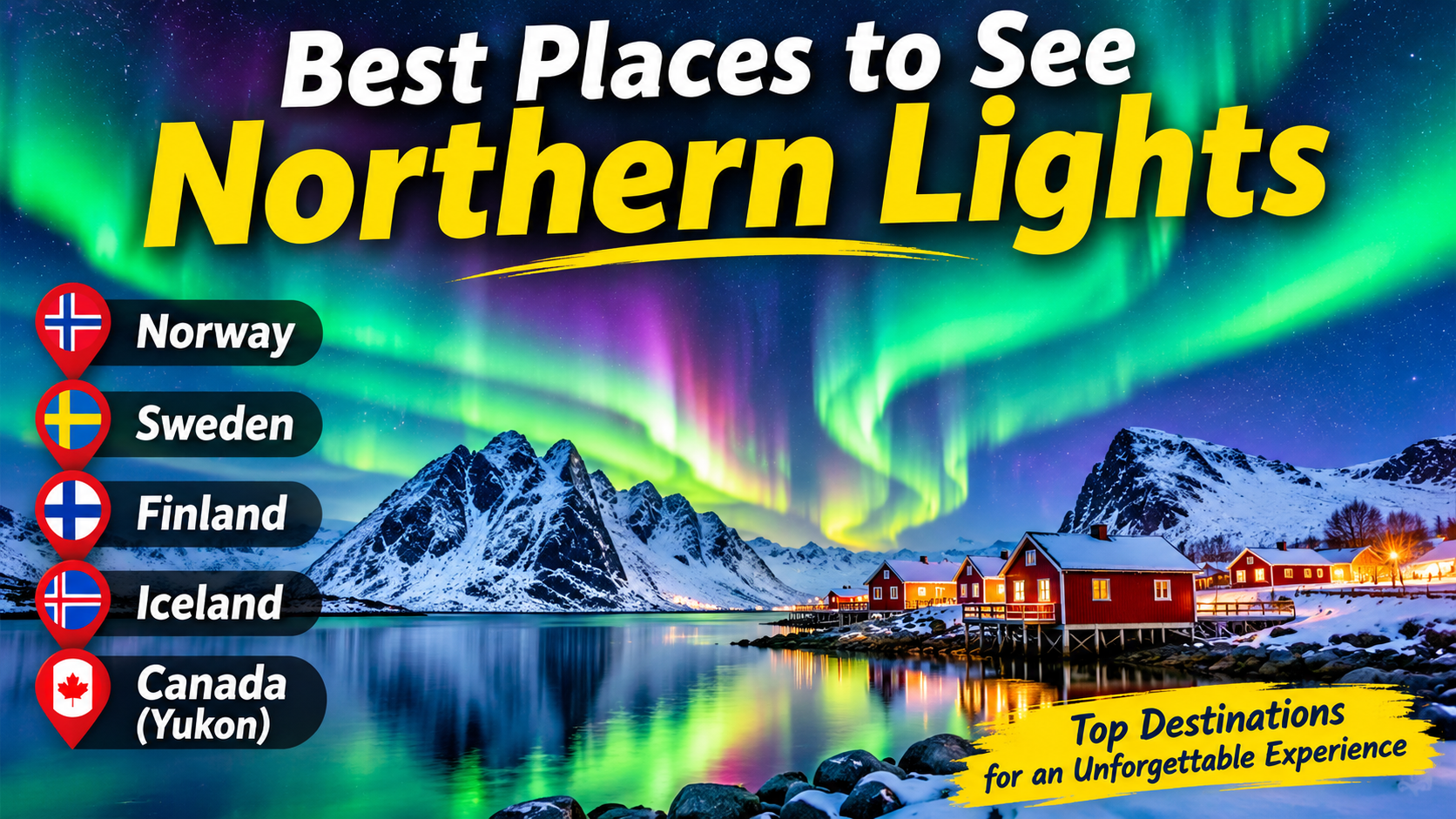
The northern lights, also called the aurora borealis, are one of the most beautiful natural sights in the world. They appear when charged particles from the Sun interact with gases in Earth’s atmosphere, creating colourful patterns across the night sky. Depending on the conditions, you may see green, purple, pink or red lights moving above the horizon.
Most popular aurora-viewing destinations are located in or near the Arctic Circle. Norway, Finland, Sweden, Iceland, Canada and the United States attract travellers who want to witness this natural phenomenon. However, choosing the right destination is important because cloud cover, light pollution and seasonal darkness affect visibility.
If you are planning an aurora holiday, this guide covers the best places to see northern lights, the ideal months to visit, and practical tips to help you plan your journey.
10 Best Places to See Northern Lights Around the World
The Best Places to See Northern Lights include several destinations in the Northern Hemisphere, each offering a different viewing experience. From remote Arctic landscapes to cities with guided aurora tours, comfortable accommodation and winter activities, travellers have plenty of options for planning their trip.
1. Tromsø, Norway
Tromsø is one of the most popular destinations for northern lights holidays. Located above the Arctic Circle in northern Norway, it offers access to dark viewing areas and organised aurora tours. The city also has hotels, restaurants and transport facilities, making it convenient for first-time visitors.
The viewing season generally runs from September to early April. Guided tours take visitors away from city lights in search of clearer skies. Some operators also provide photography assistance and warm clothing.
During the day, you can enjoy dog sledding, reindeer experiences, whale-watching trips and visits to nearby Arctic landscapes. Tromsø is a good choice if you want to combine aurora watching with sightseeing and winter activities.
2. Abisko, Sweden
Abisko is a small village in Swedish Lapland, located within Abisko National Park. It is known for its northern lights viewing conditions and local weather patterns, which can sometimes provide clearer skies than surrounding areas.
One of its main attractions is the Aurora Sky Station on Mount Nuolja. Visitors can take a chairlift up the mountain and watch the night sky from an elevated viewpoint when conditions allow.
The aurora season generally lasts from September to March. Abisko is particularly suitable for travellers whose main purpose is northern lights viewing. You can also enjoy winter walks and the peaceful surroundings of the national park.
3. Rovaniemi, Finland
Rovaniemi is the capital of Finnish Lapland and a popular destination for winter holidays. It is famous for Santa Claus Village, snowy forests and glass-roof accommodation. These cabins allow visitors to watch the sky from indoors, although clear weather is still necessary.
The northern lights season usually extends from late August to April. You can book guided tours that take you outside the town to darker viewing locations. Some excursions also include husky rides, reindeer sleigh trips and snowmobile experiences.
Rovaniemi is a suitable choice for families and couples who want to combine aurora watching with other activities. Its restaurants, hotels and tourist attractions also make trip planning easier.
4. Reykjavik and Iceland’s South Coast
Iceland is a popular choice for travellers who want to see the northern lights while visiting dramatic natural landscapes. You can combine aurora watching with trips to waterfalls, glaciers, volcanic areas and black-sand beaches.
Reykjavik is a convenient base for accommodation and organised tours, but city lights can make faint displays harder to see. For darker skies, consider visiting Thingvellir National Park, Vík and other areas along the South Coast.
The viewing season generally runs from September to April. Iceland’s weather changes quickly, so check cloud forecasts before heading out. If you are planning a road trip, keep your evenings flexible rather than depending on a single viewing opportunity.
5. Fairbanks, Alaska, USA
Fairbanks is one of the best-known destinations for seeing the northern lights in the United States. Its location beneath the auroral oval makes it a popular choice for travellers planning an aurora-focused holiday.
The main viewing season generally runs from late August to April. Areas outside the city, including Cleary Summit and locations along the Steese Highway, can offer darker skies. Chena Hot Springs is another popular stop where visitors can enjoy outdoor hot springs during winter.
Fairbanks also offers dog sledding, snow activities and opportunities to experience Alaskan winter landscapes. If seeing the aurora is the main reason for your trip, consider staying for several nights to allow for changing weather conditions.
6. Yellowknife, Canada
Yellowknife, the capital of Canada’s Northwest Territories, is known for its location under the auroral oval. It attracts travellers who want to make northern lights viewing the main purpose of their trip.
The main viewing period is generally from mid-November to early April. Late August and September can also offer opportunities once the nights become dark enough. Great Slave Lake and areas along the Ingraham Trail are popular locations for aurora watching.
You can book guided tours that provide transport to viewing areas outside the city. Some operators also offer heated shelters and photography assistance, which can be useful during cold nights. Yellowknife is worth considering if you want a remote Canadian setting.
7. Lofoten Islands, Norway
The Lofoten Islands are known for their mountains, fishing villages and coastal scenery. They offer a memorable setting for northern lights photography, especially when the aurora appears above the sea or behind traditional fishing cabins.
The viewing season generally runs from late August to early April. Popular places include Reine and Svolvær, although you should look for locations away from streetlights and busy areas.
Lofoten is also a scenic holiday destination. You can spend your days visiting fishing villages, walking along beaches and enjoying mountain views before checking the sky at night. It is particularly appealing to photographers and travellers who enjoy coastal landscapes.
8. Kiruna, Sweden
Kiruna is a town in Swedish Lapland and another option for travellers interested in the northern lights. Its location in the far north makes it suitable for winter aurora trips, particularly between September and March.
One of the area’s best-known attractions is the ICEHOTEL in Jukkasjärvi, where rooms and artworks are created using ice and snow. You can also book guided aurora excursions or travel towards Abisko for additional viewing opportunities.
During the day, visitors can enjoy snowmobiling, dog sledding and other winter activities. Kiruna is a good option if you want to experience Swedish Lapland while keeping aurora watching on your itinerary.
9. Saariselkä, Finland
Saariselkä is a small resort village in Finnish Lapland, close to Urho Kekkonen National Park. Its surroundings include forests, open landscapes and areas with limited artificial lighting, making it suitable for aurora watching.
The northern lights season generally runs from September to March. You can stay in glass-roof cabins or choose accommodation with easy access to darker areas outside the village.
Saariselkä is also popular for skiing, snowshoeing, husky rides and reindeer experiences. It is a good choice if you prefer a quieter Lapland holiday with winter activities and opportunities to watch the night sky.
10. Whitehorse, Yukon, Canada
Whitehorse is the capital of Canada’s Yukon territory and a popular base for northern lights trips. The aurora season generally extends from late August to mid-April, with February and March attracting many winter visitors.
You can join guided tours that take you away from city lights to suitable viewing areas. Some packages include warm indoor shelters, photography support and transport, which can be helpful during cold nights.
Whitehorse also offers access to hot springs, winter trails and outdoor excursions. It is worth considering if you want to combine aurora watching with a wider experience of Canada’s northern wilderness.
Best Time of Year to See the Northern Lights
The northern lights are visible when the sky is dark enough and weather conditions allow you to see them. In most Arctic destinations, the viewing season runs from late August or September until March or early April. The exact dates vary by location.
Here is what you can expect during different parts of the season:
- September and October: These months offer longer nights than summer without the coldest winter temperatures. You may also see autumn colours in some destinations.
- November to January: These months bring long hours of darkness, giving you more time to watch the sky. However, temperatures can be extremely low, and cloud cover or snowfall may affect visibility.
- February and March: These months are popular for winter holidays because nights are still dark enough for aurora viewing. You also get more daylight for sightseeing and outdoor activities.
There is no fixed time when the aurora will appear. It can show up in the evening, around midnight or during the early morning hours. Check local weather updates and aurora forecasts throughout your stay.
Which Country Has the Best Northern Lights Viewing Opportunities?
Choosing among the best countries to see the Northern Lights depends on your travel interests, budget and preferred activities. While some countries are known for their guided aurora tours, others offer beautiful landscapes, local sightseeing and a wider range of winter experiences.
| Country | Popular locations | Typical viewing season | Main attraction |
| Norway | Tromso, Lofoten Islands | September–March | Fjords and Arctic tours |
| Finland | Rovaniemi, Saariselkä | Late August–April | Glass-roof cabins and Lapland activities |
| Sweden | Abisko, Kiruna | September–March | National parks and mountain viewpoints |
| Iceland | Reykjavik, South Coast | September–April | Waterfalls, glaciers and volcanic landscapes |
| Canada | Yellowknife, Whitehorse | Late August–April | Remote landscapes and dark skies |
| USA | Fairbanks, Alaska | Late August–April | Aurora tours and hot springs |
Norway: Tromsø is a good choice for first-time visitors because it has accommodation, tour operators and Arctic activities. The Lofoten Islands are better suited to travellers who want coastal scenery alongside aurora photography.
Finland: Rovaniemi and Saariselkä are popular for glass-roof accommodation, reindeer experiences and winter activities. They are suitable for families and couples planning a Lapland holiday.
Sweden: Abisko is a popular choice for travellers whose main goal is to watch the northern lights. Kiruna offers access to winter attractions such as the ICEHOTEL.
Iceland: Choose Iceland if you want to combine aurora viewing with a road trip. You can visit waterfalls, glaciers and geothermal areas during the day.
Canada and the USA: Yellowknife, Whitehorse and Fairbanks are worth considering if aurora watching is your main priority. These destinations offer access to remote locations and organised viewing tours.
For a first northern lights holiday, Norway and Finland offer a good mix of viewing opportunities and tourist facilities. Iceland is a strong choice for landscape sightseeing, while Fairbanks and Yellowknife suit travellers who want an aurora-focused trip.
What Makes a Place Good for Seeing the Northern Lights?
Not every location in the Arctic offers the same viewing conditions. Before booking your trip, consider these factors:
- Location near the auroral oval: The auroral oval is a region around Earth’s magnetic poles where northern lights activity is commonly seen. Tromsø, Abisko, Fairbanks and Yellowknife are popular partly because of their locations.
- Clear skies: Cloud cover can block your view even when aurora activity is strong. Check local weather forecasts before choosing a viewing spot.
- Low light pollution: Streetlights, buildings and traffic can make faint auroras harder to see. Remote locations and open countryside generally provide darker skies.
- Geomagnetic activity: Solar activity affects the strength and visibility of the aurora. Higher geomagnetic activity can produce brighter displays, but it does not guarantee a sighting.
- Long hours of darkness: The northern lights need a dark sky to be visible. This is why Arctic destinations are suitable for aurora trips from late summer through winter and early spring.
When comparing the best places to see northern lights, remember that a popular destination cannot guarantee a sighting. Clear skies, darkness and solar activity all matter.
How to Increase Your Chances of Seeing the Northern Lights
Even if you choose a well-known aurora destination, you may not see the lights on your first night. These practical steps can give you more opportunities during your holiday.
- Stay for at least three to five nights
Avoid planning your entire trip around a single evening. Staying for several nights gives you more chances to experience clear weather and favourable aurora activity. If seeing the lights is your main purpose, consider staying for five to seven nights.
- Choose accommodation away from city lights
Hotels in city centres may be convenient, but nearby streetlights can affect visibility. Look for accommodation outside busy areas or choose a place with access to darker viewing spots.
- Check weather and aurora forecasts
Use local cloud forecasts and aurora prediction services to plan your evenings. The KP index can help you understand geomagnetic activity, but a high reading does not automatically mean you will see the lights. Clear skies and your location matter too.
- Consider booking a guided aurora tour
Local guides often know where to find suitable viewing locations. Some tours provide transport, warm shelters and photography assistance. This can be useful if you are visiting a remote destination for the first time or do not want to drive on icy roads.
- Wear proper winter clothing
Temperatures in Arctic destinations can drop well below freezing. Pack thermal layers, insulated jackets, warm trousers, gloves, thick socks, winter boots and a hat. Dressing properly helps you stay outside comfortably while waiting for the aurora.
- Carry a camera and tripod
A camera with manual settings and a tripod can help you photograph the northern lights. Many modern smartphones also have night photography modes. However, you do not need professional equipment to enjoy the display.
- Keep your plans flexible
Aurora activity and weather conditions can change quickly. Avoid scheduling every evening around fixed activities. Keeping some nights free gives you the flexibility to head outside when conditions improve.
What Should You Know Before Planning a Northern Lights Trip?
A northern lights holiday involves more than choosing a destination and booking a hotel. If you are travelling internationally, consider these details before confirming your plans.
- Visa and entry requirements: Check the visa rules for your destination before booking flights. Norway, Finland, Sweden and Iceland are part of the Schengen Area, while Canada and the United States have separate entry requirements. Indian passport holders should check the latest rules for their chosen country.
- Flights and accommodation costs: Flights to Arctic destinations can be expensive, particularly during the winter holiday season. Compare flight options and book accommodation early.
- Winter clothing: Regular winter jackets may not be enough for long periods outdoors in Arctic conditions. Carry thermal innerwear, insulated outer layers, waterproof boots and accessories that protect your hands, ears and face.
- Local transport: Some viewing areas have limited public transport. You may need to rent a vehicle or book a guided tour. If you are unfamiliar with driving on snow and ice, a tour can be a safer option.
- Tour bookings: Popular aurora tours and special accommodation can fill up during peak season. Check what each package includes, especially transport, photography support and cancellation conditions.
- Flexible evenings: Do not expect the aurora to appear at a particular hour. Keep your evening schedule flexible so you can respond to weather updates and local forecasts.
- Travel insurance: Consider a policy that covers medical emergencies, trip interruptions and relevant travel risks. Read the exclusions carefully if you plan to take part in winter sports.
Wrapping Up
Planning a northern lights holiday starts with choosing the right destination and season. Places such as Tromsø, Abisko, Rovaniemi, Reykjavik, Fairbanks and Yellowknife offer excellent opportunities to experience the aurora borealis. Before booking, compare travel costs, weather conditions, accommodation and viewing seasons. Try to stay for at least three to five nights to improve your chances of seeing the display. Keep your schedule flexible and check local aurora forecasts. Although sightings cannot be guaranteed, choosing the best places to see northern lights can make your trip more rewarding and give you a memorable Arctic experience.
Frequently Asked Questions (FAQs)
Q1. Where are the best places to see the Northern Lights?
Some of the best places to see the Northern Lights include Tromsø in Norway, Rovaniemi in Finland, Abisko in Sweden, Reykjavik in Iceland, Fairbanks in Alaska and Yellowknife in Canada. These destinations offer good aurora-viewing opportunities during the winter season.
Q2. What is the best time of year to see the Northern Lights?
The Northern Lights are generally visible from September to March or early April in Arctic destinations. The best viewing period depends on dark skies, clear weather and solar activity.
Q3. Which country has the highest chance of seeing the Northern Lights?
Norway, Finland, Sweden, Iceland, Canada and the United States offer good opportunities to see the aurora borealis. However, no country guarantees a sighting because visibility depends on weather and solar activity.
Q4. What are the best places to see Northern Lights on a budget?
Rovaniemi and other parts of Finnish Lapland, Abisko in Sweden, and Fairbanks in Alaska can be considered for budget-conscious aurora trips. Travelling outside peak holiday periods, booking accommodation early and choosing self-guided viewing spots can help reduce expenses.
Q5. Can you see the Northern Lights without a tour?
Yes. You can watch the Northern Lights without booking a guided tour. Choose a location away from city lights, check the aurora forecast and look for clear skies. However, local guides can help you reach better viewing locations.
Q6. How long do the Northern Lights last when they appear?
A northern lights display can last anywhere from a few minutes to several hours. The duration and intensity vary depending on solar activity and atmospheric conditions.